
Have you ever wondered why some sidewalks last for decades while others crack within a year or two?
The answer usually comes down to width, base preparation, and a few key construction steps most people overlook.
This article covers standard sidewalk widths, ADA requirements, drainage, joints, and common mistakes. I have spent time studying and working through these details firsthand, so you can trust the information here.
Whether you are a homeowner or a contractor, this guide will help you avoid costly errors and build a sidewalk that actually lasts.
Let us get straight into what really matters.
What Is the Standard Width of a Sidewalk?
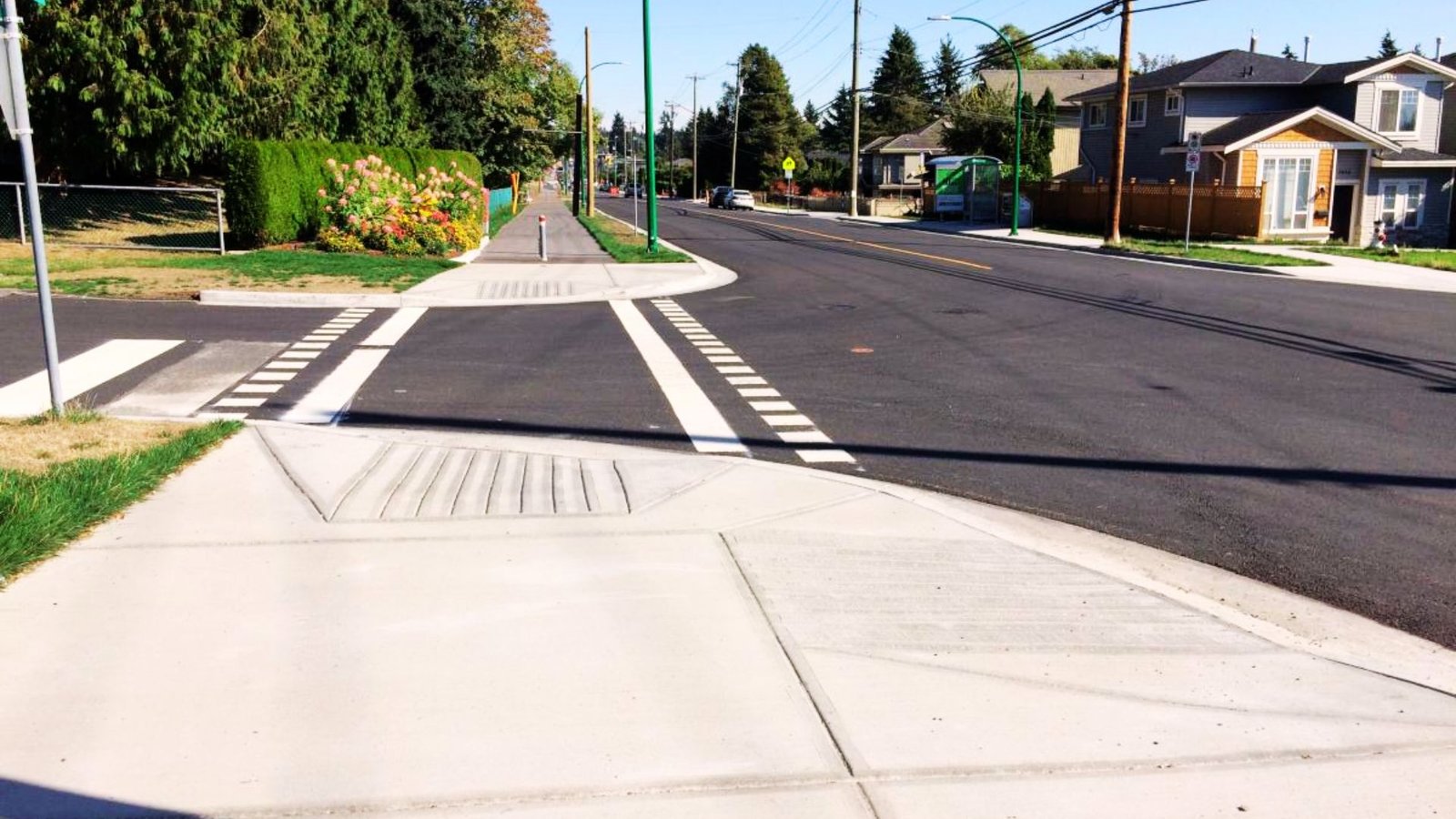
A standard sidewalk is usually 4 to 6 feet wide in residential areas. The Americans with Disabilities Act recommends at least 5 feet to keep things accessible for wheelchair users and people with mobility aids.
In commercial and high traffic areas, sidewalks are often 8 to 15 feet wide to handle larger crowds. Near schools and parks, 6 to 8 feet is the common standard for safety.
The right width depends on location, foot traffic, and local building codes. A sidewalk that is too narrow pushes people into the street, which creates real safety risks.
Following proper width standards keeps public spaces safe and easy to use for everyone.
Standard Sidewalk Width Guidelines
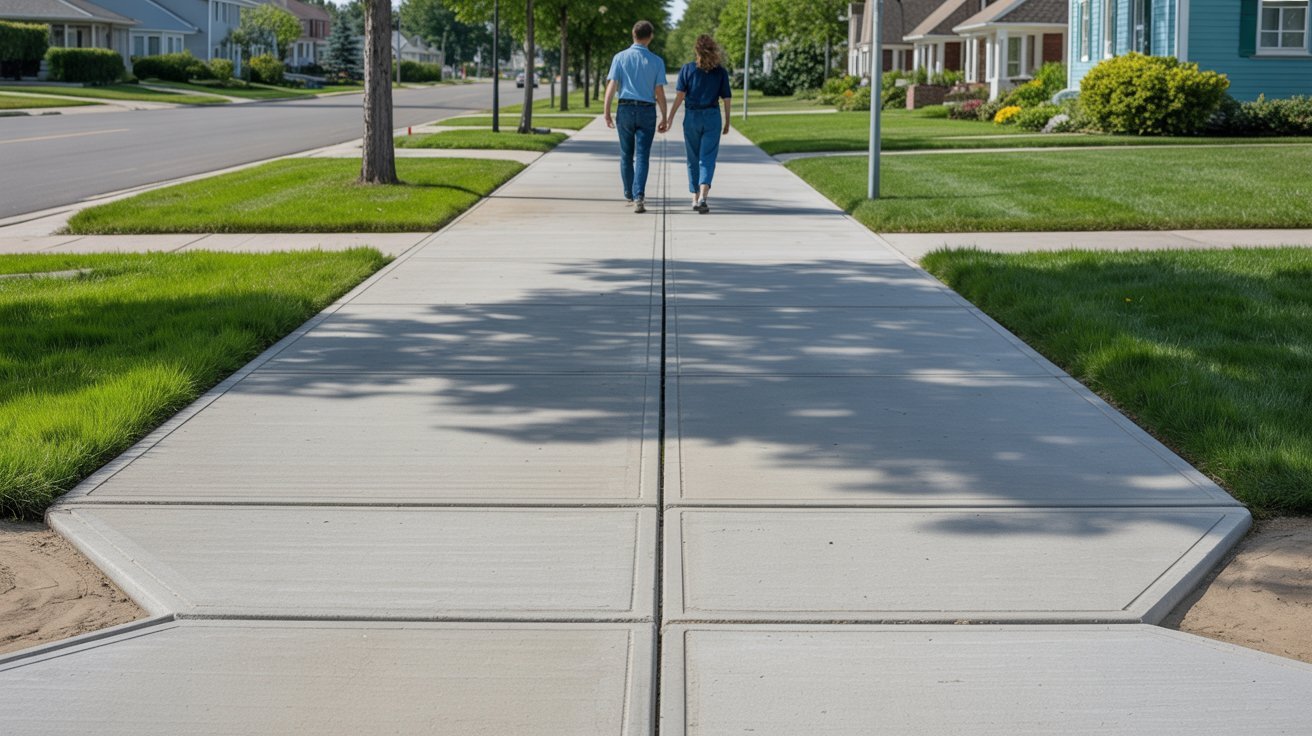
Sidewalk width rules keep foot traffic safe and accessible for everyone.
Residential Sidewalk Width
Most residential sidewalks are 4 to 5 feet wide. This gives two people enough room to walk side by side. Always check local codes before building, as requirements vary by city.
Commercial Sidewalk Width
Commercial sidewalks are usually 8 to 12 feet wide. Busy areas need more space due to foot traffic, outdoor seating, and storefront displays. Cities set their own standards based on street type.
Minimum ADA Width Requirements
The ADA requires a minimum width of 36 inches, but 48 inches is the recommended standard. This allows wheelchair users to move freely. Passing spaces are also required on narrow walkways.
Factors That Affect Sidewalk Width
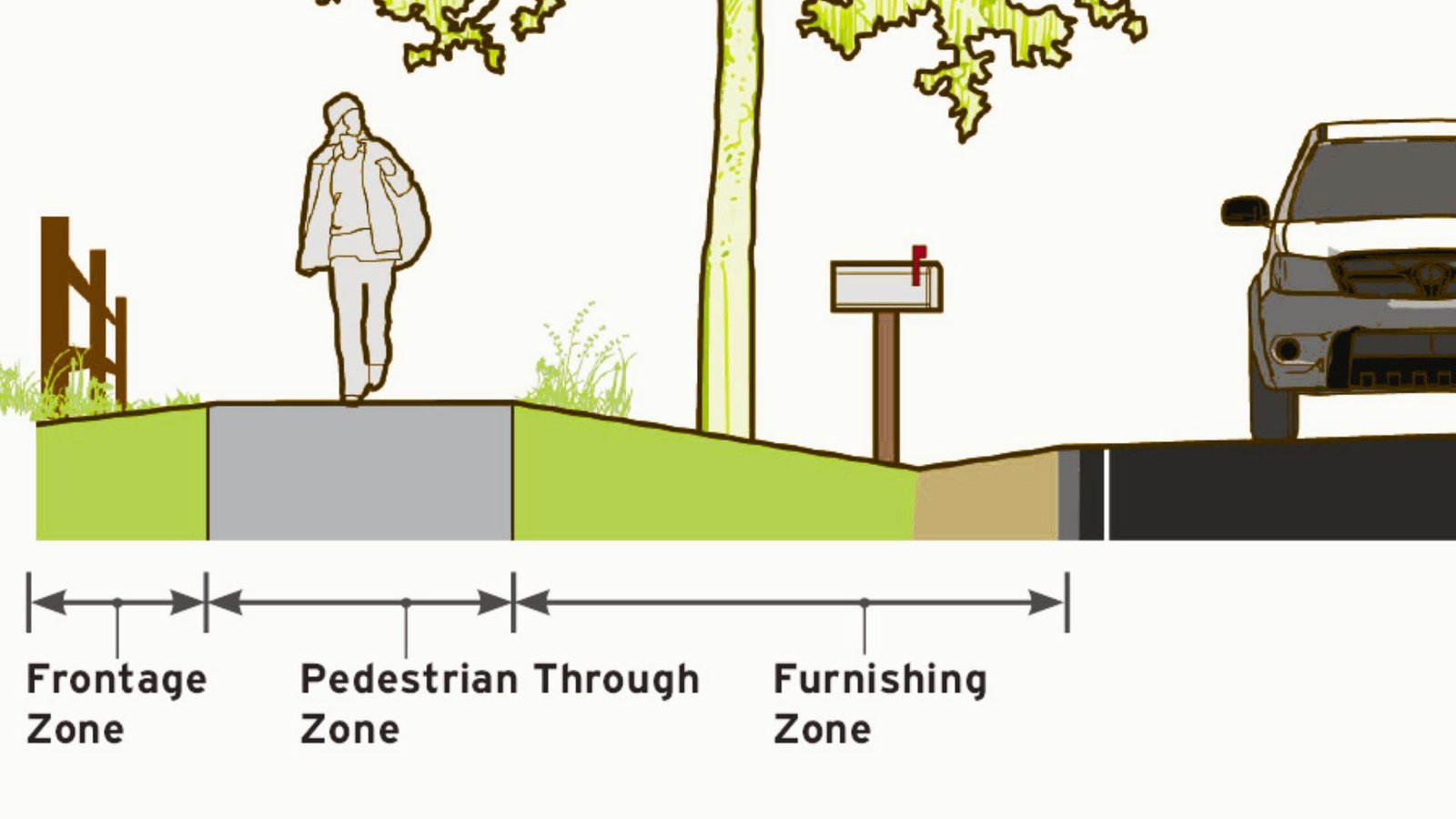
Several key factors determine how wide a sidewalk should be, from foot traffic to local rules and surrounding features.
Pedestrian Traffic
The number of daily users shapes sidewalk width decisions. High traffic areas like schools or shops need wider paths.
This gives people, wheelchair users, and stroller pushers enough room to move freely.
Local Building Codes
Cities set minimum width rules for sidewalks based on the area type. Builders must follow these before starting work.
Checking codes early avoids fines and costly rework later.
Landscaping and Utilities
Trees, poles, and underground pipes limit available space near sidewalks. Workers also need access to utility lines without major disruption.
Good planning balances all these elements while keeping the path safe and functional.
Sidewalk Thickness, Slope, and Drainage

Getting thickness, slope, and drainage right keeps a sidewalk strong and safe for years.
Standard Concrete Thickness
Most sidewalks need 4 inches of concrete. For areas where vehicles may cross, go with 6 inches. Soft ground may also need a gravel base before pouring.
Proper Cross Slope
A sidewalk needs a slight side angle of 1 to 2 percent. This moves water off the surface without making it hard to walk on.
Drainage Considerations
Standing water cracks concrete and creates ice hazards. The ground around the sidewalk should slope away from it. In rainy areas, a nearby drainage channel helps prevent long term damage.
Sidewalk Scoring and Expansion Joints
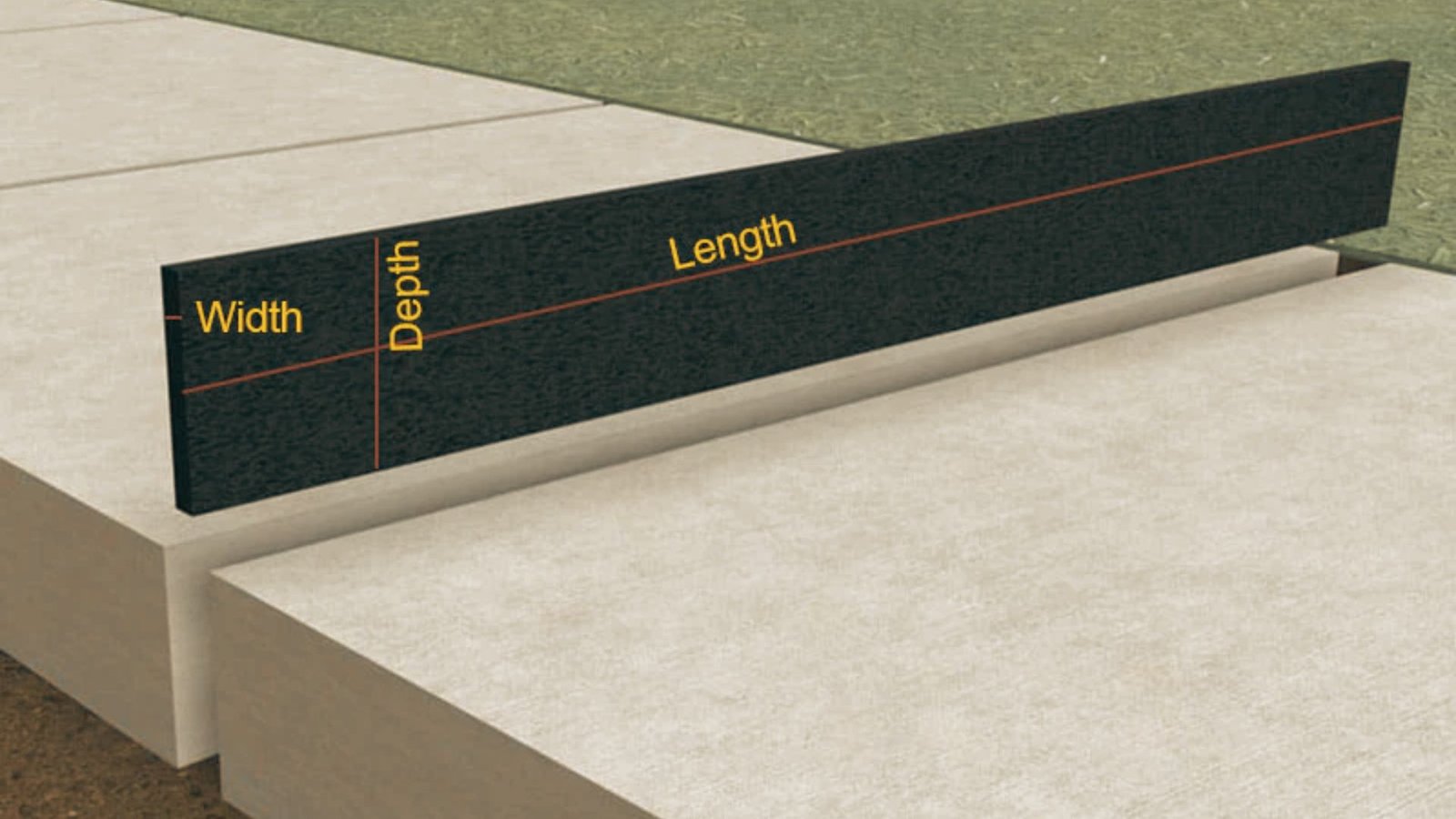
Sidewalk joints control cracking and allow natural movement in concrete. Placed correctly, they extend the life of any sidewalk.
Purpose of Control Joints
Concrete moves as temperatures rise and fall. Without joints, this movement causes random cracks across the surface.
Control joints create planned weak points that guide cracks along set lines, keeping the sidewalk intact and repairs simple.
Standard Joint Spacing
A basic rule is to match joint spacing to the slab width in feet. A 4 foot wide sidewalk needs joints every 4 feet. Joints should be cut to one quarter of the slab depth.
For a 4 inch slab, that means a 1 inch deep cut. Correct spacing from the start reduces long term repair costs.
ADA Curb Ramps and Accessibility
ADA curb ramps help people with disabilities move safely between sidewalks and streets.
Ramp Width Requirements
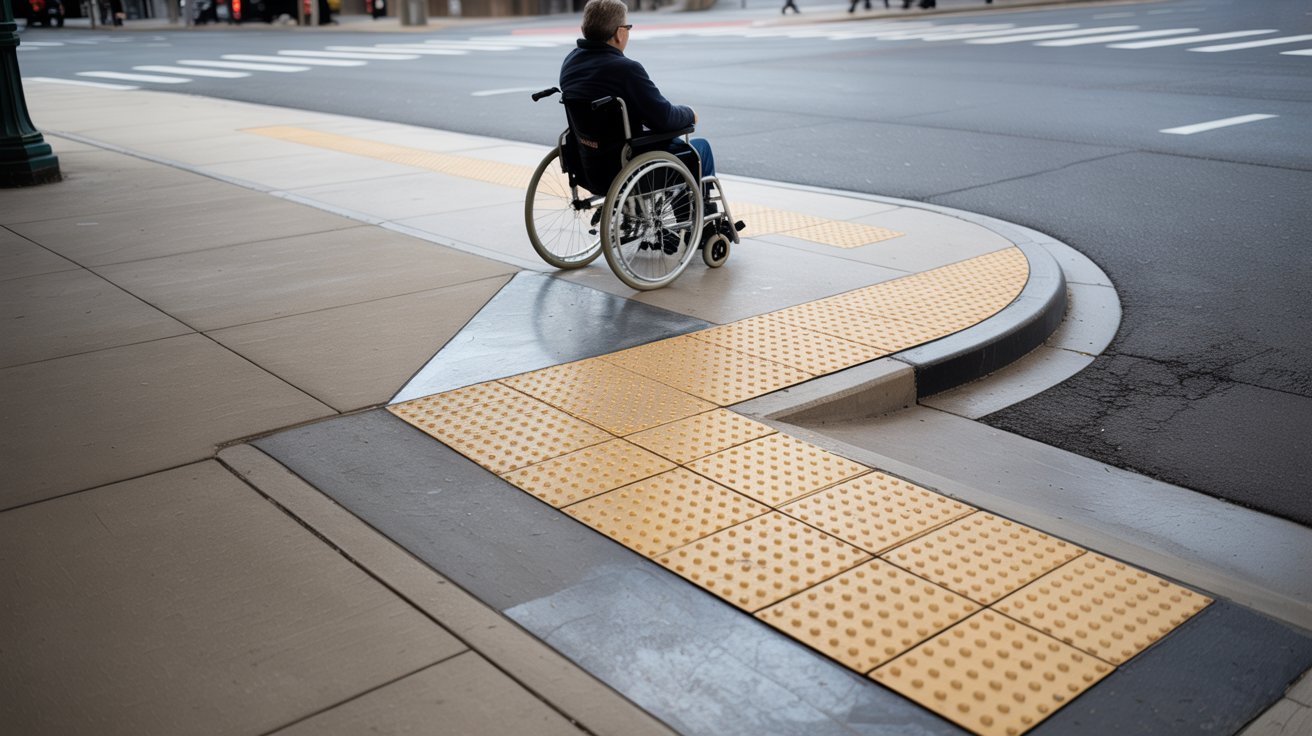
The minimum ramp width under ADA guidelines is 36 inches, giving wheelchairs enough room to pass through without trouble.
In busy areas, wider ramps of 48 or 60 inches work much better. The full width must always stay clear of poles, signs, or any objects that could block access.
Safe Sidewalk Transitions
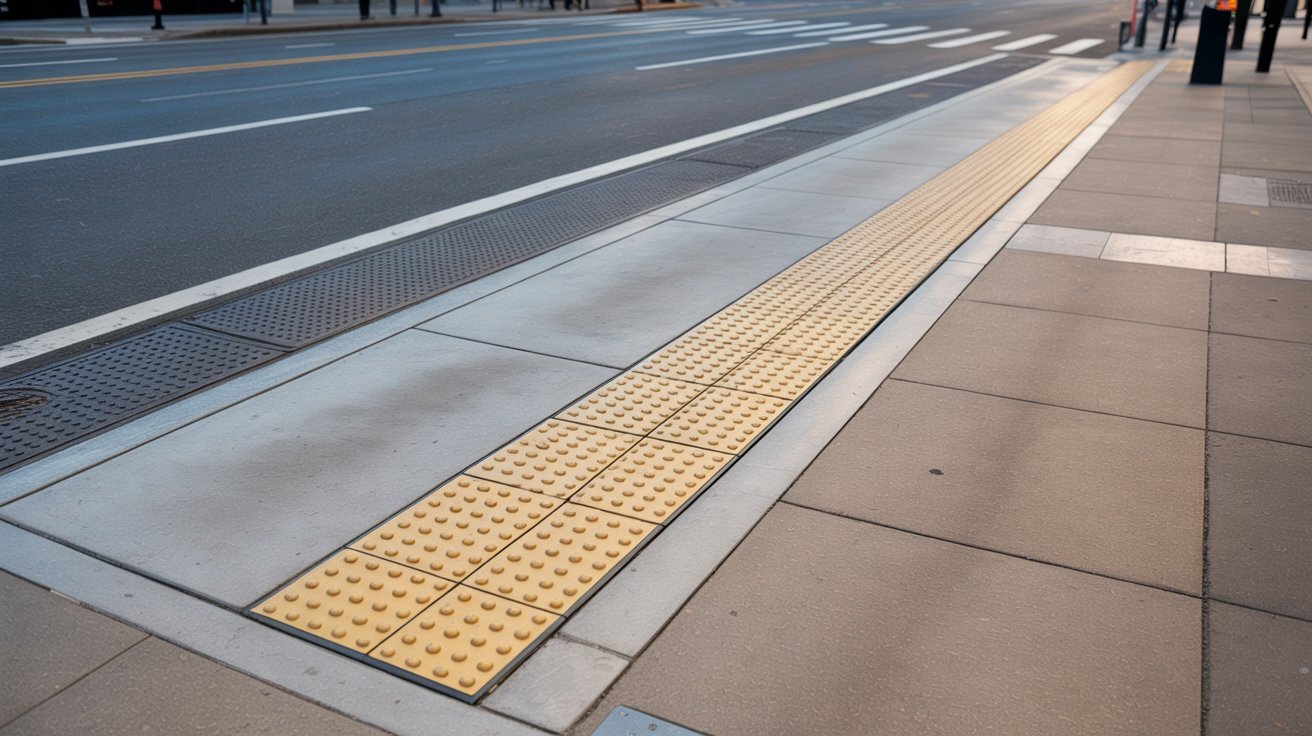
The spot where a ramp meets the sidewalk must be smooth, as any gap or raised edge can cause a fall. ADA standards allow a maximum slope of 1:12, meaning 12 inches of ramp length for every inch of rise.
Textured surfaces improve grip in wet conditions, and yellow raised dot strips warn visually impaired people they are approaching the street.
Good drainage at the ramp base prevents water from pooling and keeps the area safe for everyone.
Common Sidewalk Construction Mistakes
Small construction mistakes can lead to big repair costs down the road.
Narrow Sidewalk Design
Building a sidewalk too narrow is a very common mistake. It makes the path difficult for two people to walk side by side. It also blocks access for wheelchairs and strollers.
A width of at least 4 to 5 feet is recommended. High traffic areas need 6 feet or more.
Poor Drainage and Uneven Surfaces

Bad drainage causes water to pool on the surface. This weakens the concrete and creates slip hazards in cold weather.
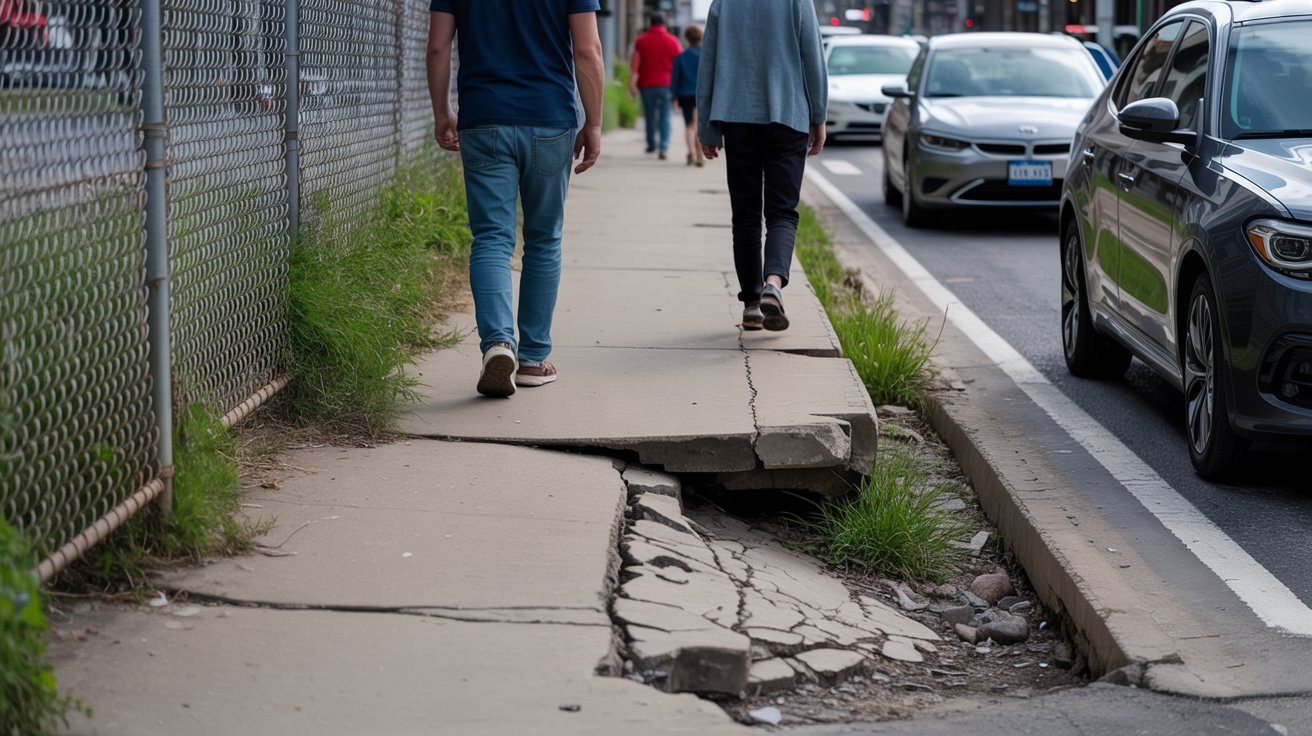
Uneven surfaces happen when the soil below is not properly compacted. Tree roots planted too close can also push slabs up over time.
A solid base and correct slope keep the sidewalk safe and long lasting.
Tips for Better Sidewalk Construction
Good sidewalk construction keeps paths safe, durable, and easy to use for everyone in the long run.
- Plan your layout first, map out the path before digging. Focus on high traffic areas and check for underground utilities to avoid problems during construction.
- Use a strong concrete mix Go for at least 3,000 PSI concrete. This strength level handles regular foot traffic and holds up well against weather changes.
- Build a solid base Remove loose or soft soil and add compacted gravel underneath. A firm base stops the sidewalk from sinking or cracking over time.
- Cut control joints Place joints every 4 to 5 feet along the sidewalk. This gives the concrete room to expand and contract without forming unwanted cracks.
- Cure the concrete properly Keep the surface moist for at least 7 days after pouring. Proper curing builds long term strength and prevents early surface damage.
Conclusion
Building a good sidewalk takes more time than most people expect. I learned that skipping the base preparation always leads to cracks later. Trust me, doing it right the first time saves a lot of money and stress.
If you are planning a sidewalk project, start small and focus on each step carefully. The results will speak for themselves.
Have you worked on a sidewalk project before? Drop your experience in the comments below. I would love to hear what worked for you!
Frequently Asked Questions
What is the best concrete mix for sidewalk construction?
A mix with at least 3,000 PSI works well for most sidewalks. It handles foot traffic and weather changes without breaking down quickly.
How deep should a sidewalk base be?
A base of 4 to 6 inches of compacted gravel is ideal for most sidewalks. This depth provides enough support to prevent sinking and cracking over time.
Why do sidewalks crack so easily?
Sidewalks crack mainly due to poor base preparation and missing control joints. Temperature changes also cause concrete to expand and contract, leading to surface cracks.
How long should concrete cure before use?
Concrete needs at least 7 days of curing before regular foot traffic. Keeping it moist during this time builds strength and reduces the chance of early damage.
How often should a sidewalk be inspected?
Checking your sidewalk once a year is a good habit. Early inspection helps spot small cracks or uneven areas before they turn into bigger, costly repairs.